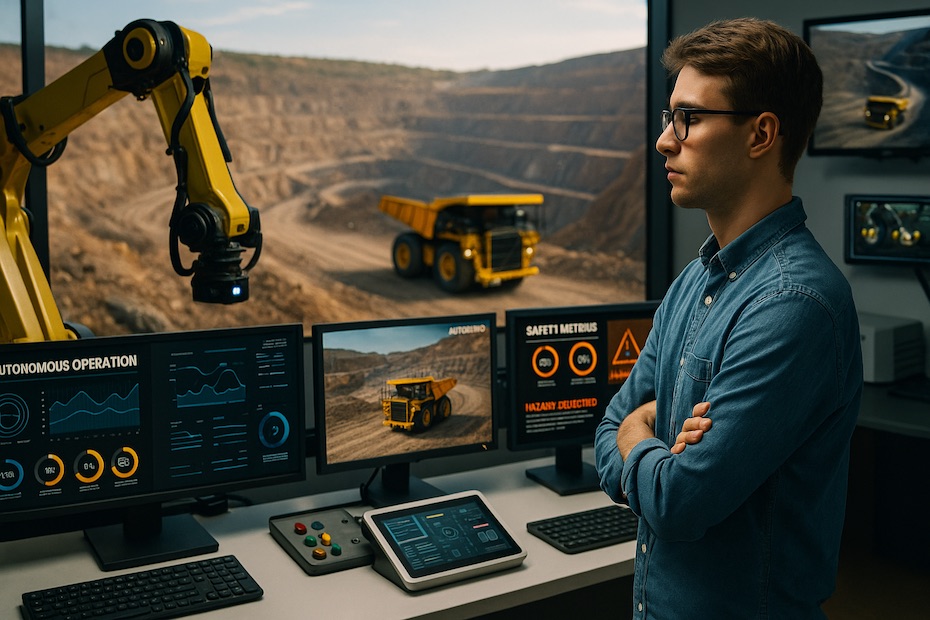
Automation is reshaping the mining industry faster than ever. You now have a unique chance to build products, platforms, or services that meet the demands of an industry moving toward autonomy, sustainability, and data-driven efficiency. From AI exploration tools and autonomous trucks to IoT-powered operations and upskilling platforms, there’s no shortage of gaps that need creative, nimble solutions. This article explores key areas where entrepreneurs like you can build value—and build businesses—while contributing to the safer, cleaner, and more efficient mines of the future.
AI-Powered Mineral Discovery
You can now leverage machine learning models to predict mineral deposits with better accuracy than traditional geological surveys. Companies like KoBold Metals are showing how AI is being used to find lithium, copper, and cobalt more efficiently—resources that are vital to global clean energy goals. This opens a path for you to build platforms that turn geological data, satellite imagery, or historical drill results into exploration predictions for juniors or private investors. What used to require a geophysicist and a helicopter now needs a dataset, an algorithm, and a smart interface.
Your angle might be creating custom tools for smaller firms priced out of big exploration tech. With AI tools trained for niche minerals or geographic zones, you can help untapped regions find value in their underground assets. A user-friendly interface layered over open-source datasets could become a goldmine of its own.
Autonomous Equipment Systems
Mining companies are already adopting autonomous haul trucks and drilling rigs that reduce labor cost and increase uptime. Rio Tinto has shown that autonomous fleets operate with 15% greater efficiency than manned ones. But while the machines may be self-driving, the systems behind them still need improvements in fleet coordination, predictive maintenance, and performance analytics.
If you’re building in software, this is your signal. You could offer services that aggregate fleet data to improve mine-wide logistics or create plug-ins for vendors like Komatsu or Caterpillar that enhance usability. Alternatively, smart maintenance systems that flag parts before failure can save operators millions annually. Don’t forget the training angle either—simulated environments for technicians transitioning into automation-focused roles are in high demand.
Industrial IoT and Real-Time Connectivity
Mines are becoming remote operations centers, and that shift requires reliable data infrastructure. 5G-powered underground networks, like those trialed in Sweden’s Boliden mine, are setting new standards for real-time monitoring and robotics coordination. But connectivity gaps still exist, especially in developing countries or deep-pit operations.
Here’s where you can innovate. By offering rugged IoT devices that relay environmental metrics like gas levels, equipment vibrations, or tunnel temperature, you become part of the mine’s digital nervous system. Combine this with a lightweight dashboard or API integration, and your platform can deliver vital analytics to supervisors hundreds of miles away. You could also specialize in building mesh networks for off-grid mining operations that need connectivity on a budget.
Robotics for Safety and Maintenance
Automation helps cut risks, but dangerous environments remain. Robots and drones that inspect unstable areas, map underground zones, or retrieve hazardous materials reduce the need for humans in the most unsafe tasks. Companies like Australian Droid & Robot (ADR) are already deploying such technologies after mine collapses.
There’s space for you to build mobile robots with enhanced sensor payloads, deployable in situations where humans shouldn’t go. Focus on compact systems that can transmit 3D scans, air quality data, or live feeds. If hardware isn’t your strength, consider software that logs, annotates, and archives robotic inspection data—adding structure to an often fragmented safety process.
Automation for Daily Operations
Much of mining’s inefficiency is hidden in daily manual workflows—shift logs, maintenance reports, safety inspections. These processes are often still done on paper or isolated systems. Your opportunity lies in digitizing routine operations with minimal disruption to existing workflows.
Mobile-friendly apps that help supervisors log equipment status, assign tasks, or conduct digital inspections are surprisingly rare. You can also offer platforms that generate reports automatically, provide audit trails, or notify supervisors about regulatory deadlines. These aren’t just nice-to-haves—they’re tools that directly affect uptime and compliance.
ESG and Environmental Monitoring
Automated mining supports environmental goals through better resource use, reduced fuel waste, and improved precision. But regulatory bodies now demand proof—backed by data. This opens doors for you to build monitoring systems that track emissions, soil conditions, or water use in real time.
Blockchain-based traceability for minerals or carbon footprint dashboards tailored to mining operations could give small-to-mid-size operators a competitive edge. Don’t overlook the market for platforms that automatically generate ESG reports for investors, regulators, or public disclosures. When you help mines operate more transparently, you make yourself indispensable to their long-term success.
Reskilling Platforms for Mining Workers
Jobs in mining are changing. Manual roles are being replaced with automation-focused ones—but that doesn’t mean people are out of the picture. Many companies are now investing in retraining workers to operate equipment, manage data systems, or provide tech support.
You could create reskilling platforms focused on short-term, high-impact training—especially in regions where mining is a key employer. Whether it’s an LMS that covers automation tech or a mobile bootcamp for upskilling truck drivers into drone operators, you’re helping communities adapt to automation instead of being displaced by it.
Mining-as-a-Service and Remote Consulting
Mining companies often lack the in-house expertise to implement these technologies quickly. That’s where you step in. As a consultant or agency, you can provide remote monitoring, digital transition planning, or automation roadmaps. Whether you’re designing workflow automation, helping with data architecture, or troubleshooting sensor deployments, the industry needs flexible partners.
You might also consider “mining-as-a-service” offerings where clients pay for access to your software platforms, hardware bundles, or analytics dashboards rather than buying them outright. With subscription pricing, smaller players can afford high-quality tools, and you build recurring revenue.
Key Startup ideas in automated mining
- AI tools for mineral discovery
- Predictive fleet management systems
- IoT environmental sensors
- Inspection robots
- Workflow digitization apps
- ESG compliance platforms
- Reskilling education tech
In Conclusion
The rise of automation in mining isn’t just a tech upgrade—it’s an open call for builders like you to reshape the industry from below ground up. Whether you create smarter tools for discovery, boost safety with robotics, or digitize everyday operations, there’s room for innovation. The sector has demand, budget, and urgency. If you bring technical skill and entrepreneurial focus, you’ll find plenty of partners—and problems—waiting for your solution.
For deeper industry insights and professional networking opportunities in mining technology, connect with Alex Clug on LinkedIn.

Alex Clug is a global entrepreneur and investor with 25+ years building and scaling ventures in medical robotics, telecommunications, mining, and private equity. He currently leads The Dolphin Group, advising early-stage and cross-border companies in robotics, fintech, natural resources, and other innovation-driven industries.