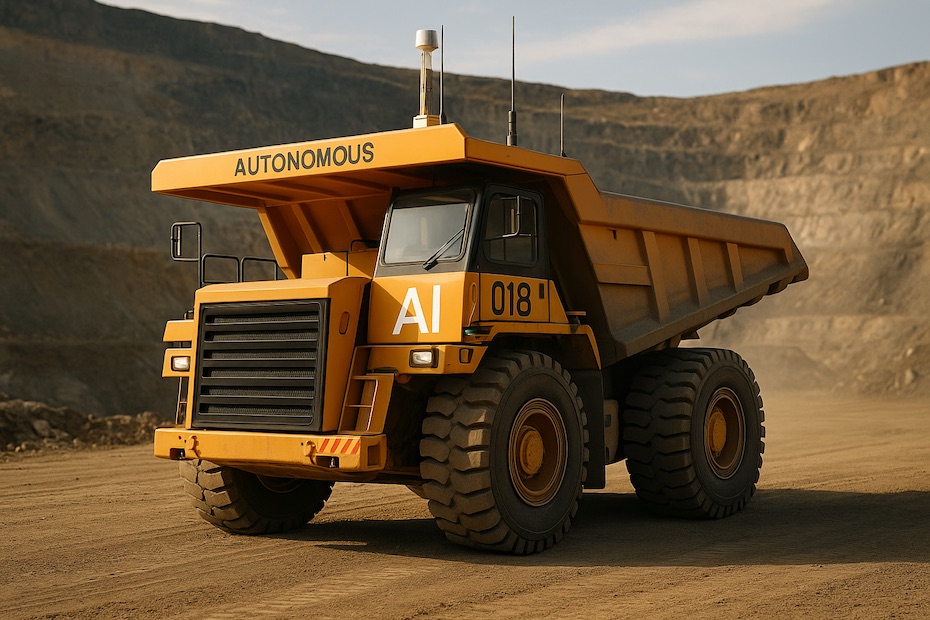
If you’re watching the mining industry closely, you already know the focus has shifted toward automation. AI and robotics aren’t just experimental tools—they’re active solutions being used to make mines safer, more productive, and far more efficient. From autonomous trucks hauling ore to sensor bots navigating unstable tunnels, the technology is no longer a preview of the future. It’s already working underground and at scale. This article takes you inside real deployments, walks you through investment trends, and explains why this sector is primed for strong returns if you move with clarity and strategy.
Why Mining Demands Smarter Solutions
As a decision-maker in mining, you understand how safety, cost control, and output quality determine success. Mining operations are becoming more remote and more complex, and manual methods aren’t keeping pace with production demands or risk standards. When labor is hard to find or retain, and when regulations tighten around worker exposure and emissions, your ability to run efficient operations gets squeezed. That’s where AI and robotics step in—not to replace every job, but to make sites safer, more predictable, and consistently productive.
You’re not dealing with abstract promises here. These technologies are already deployed in real mines with measurable results. By reducing exposure to dangerous environments and eliminating inefficiencies, you’re not only improving safety outcomes—you’re also giving your operation the tools to stay competitive. The key isn’t just automation; it’s intelligent automation backed by data, precision, and real-time responsiveness.
Real Applications That Are Already Paying Off
When you put smart systems into practice, the results speak for themselves. In Australia’s Pilbara region, autonomous haul trucks run day and night with no breaks, reducing fuel waste and improving delivery precision. These trucks are monitored and directed by centralized AI, which optimizes routes in real-time based on terrain, weather, and load balancing. With this system, you’re not just cutting costs—you’re keeping operations running continuously without safety trade-offs.
In other parts of the world, aerial drones powered by machine learning are reshaping how you manage site surveillance. For example, in West Africa, drones help detect illegal mining activities across vast, hard-to-patrol areas. These drones collect geospatial data and send alerts, allowing your team to respond swiftly without putting anyone in danger. You stay informed, compliant, and secure—all with fewer boots on the ground.
Companies Leading the Shift Toward AI and Robotics
You’ll notice that both giants and startups are investing heavily in mining automation. Rio Tinto has logged more than 200 million tonnes of material hauled autonomously through its “Mine of the Future” program. These efforts aren’t just proof of concept—they’re delivering high-volume output with fewer incidents and higher system uptime. When you see large-scale results like this, it’s easier to justify similar moves in your own operation.
At the same time, smaller companies are offering fast, flexible solutions. sensmore, for example, enables you to retrofit existing quarry machines with AI kits instead of replacing your fleet. ADR, a startup from Brisbane, builds robots that inspect unstable underground spaces—doing the kind of work that’s too risky for human teams. These are not fringe players; they’re building technologies that solve specific problems you face every day.
Key Drivers Pushing This Investment Forward
When you look at what’s pushing adoption, it starts with safety. You need to protect your workforce, and robotics gives you a reliable way to reduce physical exposure in high-risk zones. Whether it’s gas detection, tunnel mapping, or live rock stability checks, these tools help your crews focus on critical decisions instead of dangerous tasks. It’s about reducing harm while increasing visibility.
Labor shortages are another driver. You’ve likely struggled with staffing remote operations, and automation helps you scale without being at the mercy of shifting labor pools. In parallel, cloud-connected devices and edge AI platforms are improving real-time decision-making. These systems don’t just collect data—they process it on-site and give you actionable results in seconds. With this kind of intelligence at your fingertips, your operations become faster and more reliable.
Where Investors Are Seeing Value
As someone evaluating the business case, you want to see return timelines and risk profiles. Most AI and robotic systems now offer return on investment within 12 to 24 months. That includes equipment that reduces blasting waste, haulage systems that cut fuel costs, and mapping bots that prevent rework. These are capital expenses, but they’re matched by efficiency gains that show up fast in your balance sheet.
Investors are following the action, too. sensmore’s $7.3 million seed funding round and ADR’s recent $2 million raise show that capital is flowing to practical solutions. Major partnerships between tech giants and mining companies are accelerating product development and deployment. When you target companies building modular, scalable solutions—especially those focused on underground and retrofit tech—you’re looking at options with strong acquisition or IPO potential.
Technologies to Keep on Your Radar
Autonomous haulage systems (AHS) are quickly becoming standard in large-scale mines. If you’re not already evaluating these systems, it’s time. AHS platforms not only reduce operational costs but also make logistics more predictable. With centralized coordination and real-time adjustments, you minimize delays, avoid bottlenecks, and move material faster.
Underground inspection tools are another fast-advancing area. Lightweight, sensor-rich robots are replacing manual checks, especially in collapsed or unventilated shafts. These systems can be deployed with minimal setup and offer environmental data that would otherwise be impossible to gather. Pair this with edge-to-cloud planning platforms, and you’re building a tech stack that gives you control and confidence over your site conditions.
Considerations Before You Invest or Implement
As much as the benefits are clear, you need to prepare for the real challenges of deployment. Cost remains a barrier for some operators, especially if you’re considering full-fleet upgrades or mine-wide automation. Some technologies, particularly high-end AI platforms and autonomous systems, can require $2–5 million upfront. But keep in mind—many of these investments begin to pay back within two years through cost reductions and higher output.
You also need to manage integration carefully. Bringing new tech into a mine with legacy equipment and existing workflows isn’t always seamless. Training your staff takes time, and reworking operational procedures can stretch over several months. That said, when done right, the shift sets you up for long-term gains in consistency and scalability. If your team is aligned and well-supported, the transition becomes not only doable—but profitable.
What to Know About AI and Robotics in Mining
- ROI often arrives within 12–24 months
- Robots inspect tunnels and unstable shafts
- Drones identify threats without endangering crews
- Retrofitting old machines is a proven strategy
Where the Sector Is Headed Next
Looking ahead, you should expect more hybrid models combining edge processing with cloud-based orchestration. Microsoft and AWS are already working with mining firms to create end-to-end systems that link equipment, data, and planning tools. This reduces human decision lag and allows real-time resource allocation—even across multiple sites.
You’ll also see more consolidation in the sector. Startups offering solid tech are being targeted by larger firms eager to expand capabilities quickly. If you’re investing, keep an eye on acquisition trends, especially in underground robotics, autonomous planning, and sensor integration. These are the segments where adoption is growing fastest and returns are most immediate.
In Conclusion
AI and robotics aren’t optional anymore—they’re essential tools that are helping you modernize mining operations with real, measurable results. When you invest strategically in automation, you’re reducing exposure, raising output, and building a foundation for the next generation of resource extraction. The opportunity is no longer just to keep up—it’s to lead.
For video demonstrations of mining automation in action, visit YouTube.

Alex Clug is a global entrepreneur and investor with 25+ years building and scaling ventures in medical robotics, telecommunications, mining, and private equity. He currently leads The Dolphin Group, advising early-stage and cross-border companies in robotics, fintech, natural resources, and other innovation-driven industries.